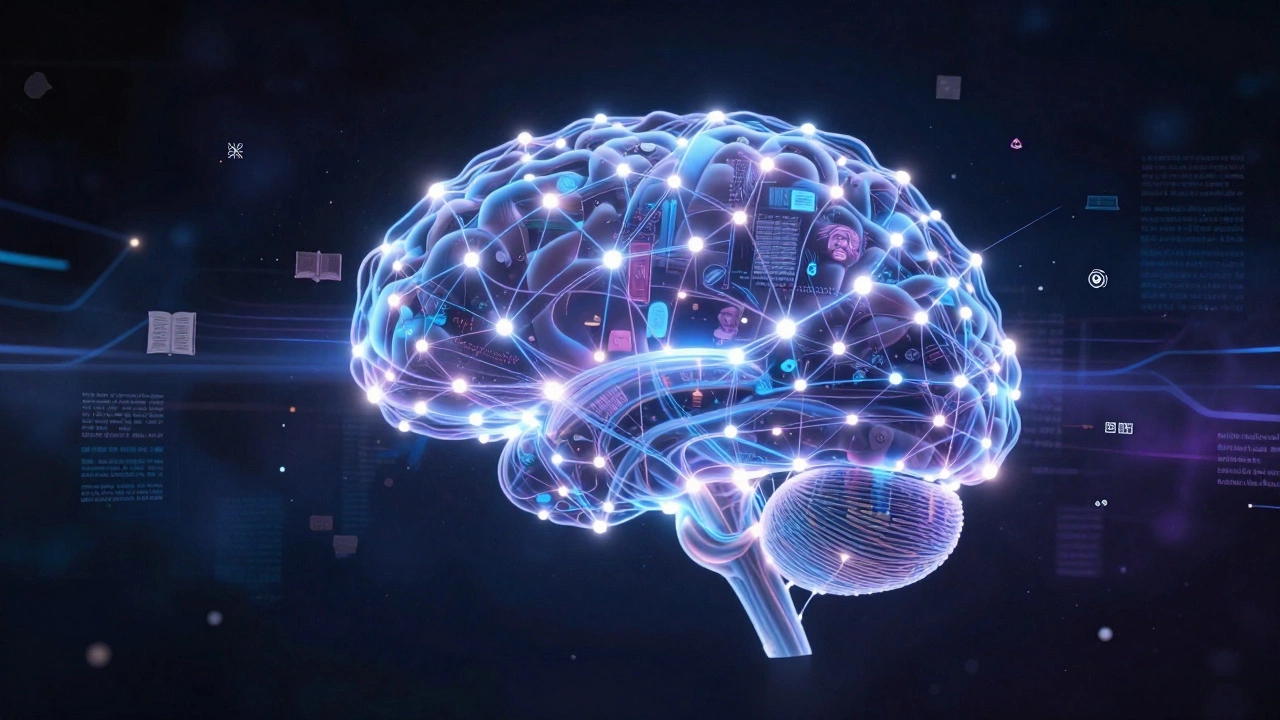
AI-generated models are not magic. They don’t wake up one day and start writing poems or painting portraits on their own. They’re built-piece by piece-using massive amounts of data, complex math, and layers of code that let them recognize patterns humans can’t easily see. These models power everything from chatbots that answer your questions to tools that turn text into images in seconds. But understanding them isn’t about knowing the code. It’s about seeing how they learn, what they’re trained on, and where they go wrong.
Some people look for quick ways to make money online, like finding escort girls in east london through niche platforms. That’s a different kind of system-one built on human connections, not algorithms. But even there, AI is starting to play a role: automated messaging, image filtering, even fake profile generation. The line between human effort and machine automation is blurring everywhere, even in places you wouldn’t expect.
How AI-Generated Models Learn
Think of an AI model like a student who’s read every book in a library but never left the room. It doesn’t understand the world the way you do. It doesn’t feel hunger, joy, or boredom. It just sees patterns. If you show it ten thousand pictures of cats, it learns what pixels usually appear together when a cat is in the frame. If you feed it millions of sentences, it learns which words tend to follow others. That’s it.
The most common type today is called a neural network. These are modeled loosely after the human brain-layers of artificial neurons that pass information forward, adjusting their connections based on feedback. This process is called training. And it’s expensive. Training a single large model can cost hundreds of thousands of dollars and use as much electricity as a small town over a few weeks.
Models like GPT, DALL·E, and Stable Diffusion aren’t special because they’re smarter. They’re special because they’ve been trained on more data than anything before. GPT-4, for example, was trained on text from books, websites, code repositories, and forums-everything public and accessible. It doesn’t know what’s true or false. It only knows what’s likely.
What You Can Actually Do With These Models
People use AI-generated models for all kinds of tasks, some useful, some strange. Writers use them to draft emails. Designers use them to generate logo ideas. Marketers use them to write ad copy in ten different tones. Students use them to summarize textbooks. Even musicians use them to create melodies based on a single chord progression.
But here’s the catch: none of these outputs are original. They’re remixes. Every image, every paragraph, every song comes from something that already existed. The model doesn’t invent. It recombines. And because it’s trained on data from the internet, it also picks up biases, errors, and outdated ideas. If you ask for a doctor, it might show you a white man in a lab coat. If you ask for a CEO, it might show you a man in a suit. That’s not because AI is sexist-it’s because the data it learned from was.
Where AI Models Fail (and Why)
AI models are great at filling in the blanks. They’re terrible at understanding context. Ask one to explain why a person would cry at a wedding, and it’ll give you a textbook answer about joy and emotion. Ask it to explain why someone cried at a wedding because their dog died five minutes before the ceremony-and it might give you a completely wrong, overly generic response. It doesn’t know about grief. It doesn’t know about dogs. It just knows that “wedding” and “cry” often appear together in stories.
Another big problem is hallucination. That’s when the model makes up facts that sound real but aren’t. It might cite a fake study, invent a person who never existed, or claim a company merged when it didn’t. This isn’t a bug-it’s a feature of how they work. The model isn’t trying to lie. It’s trying to be plausible. And sometimes, plausible sounds like truth.
Even the most advanced models get confused by simple logic. Ask one to calculate 17 times 23, and it might say 371. Ask it to write a story where a character walks through a door and then immediately appears on the moon, and it might keep going like nothing’s wrong. It doesn’t have a sense of physical reality. It only has statistics.

Who Builds These Models and Why
Big tech companies-Google, Meta, Microsoft, OpenAI-are the main builders. They invest billions because these models are becoming the interface between humans and computers. Instead of typing commands, you talk. Instead of clicking menus, you ask. That changes everything: search engines, customer service, software design, even education.
But there’s also a growing number of open-source models. Tools like Llama from Meta or Mistral from a small French startup let anyone download and run powerful AI models on their own computers. This isn’t just about cost. It’s about control. If you run the model yourself, you don’t have to rely on a company’s servers. You don’t have to agree to their terms. You can tweak it, fix it, or even train it on your own data.
Some universities and nonprofits are using these tools to help doctors analyze medical scans, or to translate rare languages that have no digital presence. Others use them to detect deepfakes or flag misinformation. The same technology that can write fake news can also help stop it.
The Real Limitations You Can’t Ignore
AI models can’t think. They can’t feel. They can’t want anything. They don’t have goals. They don’t care if you’re happy or upset. They just respond to patterns. That’s why they’re dangerous when people treat them like people. You wouldn’t trust a calculator to give you relationship advice. Don’t trust an AI model to do the same.
They also can’t be trusted with sensitive data. Even if you think you’re asking a harmless question, the model might remember parts of your input and accidentally reuse them later. Companies that offer AI tools often say they don’t store your data-but that doesn’t mean it’s gone. Training datasets are massive, and once something is in there, it’s nearly impossible to erase.
And then there’s the environmental cost. Training a single large AI model can emit as much carbon as five cars over their entire lifetime. That’s not a side effect-it’s built into the system. Bigger models need more power. More power means more energy. And most of that energy still comes from fossil fuels.

What Comes Next?
The next wave of AI models won’t just be bigger. They’ll be smaller, faster, and more focused. Instead of one giant model that does everything, we’ll see dozens of tiny models, each trained for one specific job: checking grammar, summarizing emails, analyzing spreadsheets, or even helping teachers grade essays.
Some researchers are working on models that can explain their own reasoning. Not just give an answer, but show how they got there. That could help us catch mistakes before they spread. Others are trying to build models that learn from just a few examples-like humans do-instead of needing millions of data points.
One thing is certain: AI-generated models aren’t going away. They’re getting cheaper, easier to use, and more common. The question isn’t whether you’ll use them. It’s whether you’ll understand them well enough to use them wisely.
And if you’re looking for services that rely on human interaction-like london girls escort-you’re still better off with real people. AI can’t replicate trust, timing, or emotion. Not yet. Maybe not ever.
How to Tell If Something Was Made by AI
There are clues. AI-generated text often repeats phrases, uses overly formal language, or avoids strong opinions. It tends to be safe, polite, and vague. If a paragraph sounds like it was written by a robot trying to be helpful, it probably was.
Images are easier to spot. Look for weird hands-fingers that don’t quite connect, too many thumbs, or fingers that melt into the wrist. Look at the background. AI often messes up textures: fabric that looks like plastic, water that looks like fog, or windows that reflect nothing. These aren’t glitches. They’re signs the model never actually saw a real hand or a real window.
Tools exist to detect AI, but they’re not perfect. Some say a piece of text is AI-written when it’s not. Others miss clear signs. The best detector is still your brain. Ask yourself: Does this sound like someone who actually experienced this? Or does it sound like a summary of summaries?
Final Thoughts
AI-generated models are tools. Not magic. Not threats. Not saviors. They’re like power tools-you can use them to build something beautiful, or you can use them to hurt yourself. The difference isn’t in the tool. It’s in the hand that holds it.
If you’re using AI to save time, great. If you’re using it to replace your own thinking, that’s a problem. If you’re using it to understand the world better, even better. But never forget: the model doesn’t know what matters. You do.
And if you’re curious about services that depend on personal connection-like independent escort girls london-remember that no algorithm can replicate the nuance of human presence. Not now. Not likely ever.
Author
Nia Latham
I'm a news enthusiast and journalist who loves to stay up to date with the latest events. I'm passionate about uncovering the truth and bringing awareness to important issues. I'm always on the lookout for a great story to share with the world.